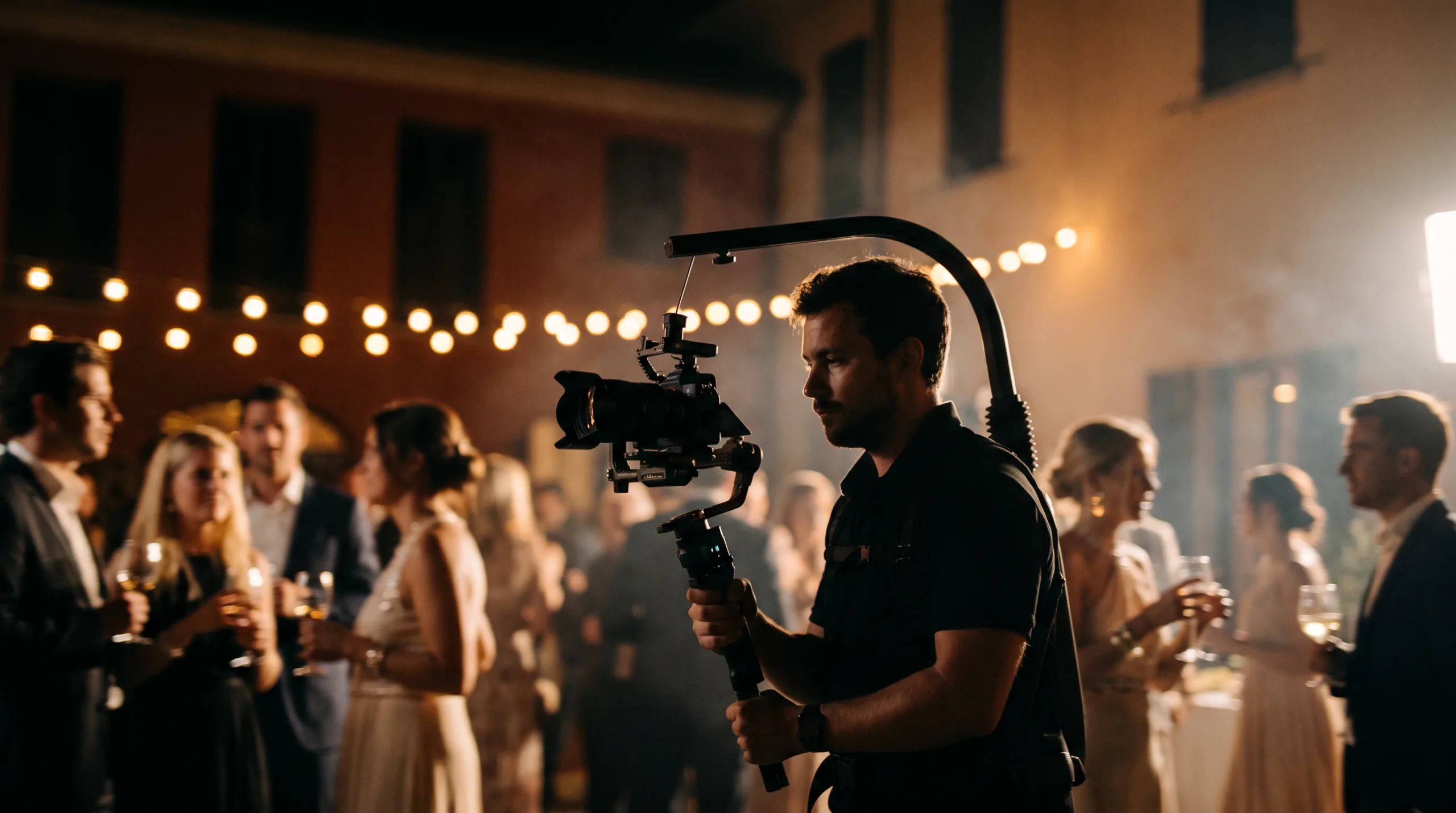

A company aftermovie is a short film that restores the highlights of a professional event. It organizes images, reactions and music around a narrative, without replacing the integral capture of interventions. Extracts and expected ratios are prepared from the brief.
The problem, when we try to produce one, is the blur. Many confuse aftermovie and capture, underestimate what really drives the price, and brief their provider three days before the event. The result: a film that archives instead of telling. Here’s what a company aftermovie really is, what it’s for, what it costs, and how to succeed.
What exactly is a corporate aftermovie?
The term comes from the world of festivals: the film broadcast “after” the event to restore the atmosphere and make you want to come back. Applied to the company, the principle is identical, but the objectives are business: prove, shine, recruit, resell the next edition.
The simple definition
A corporate aftermovie is a short film of one to three minutes, mounted to the rhythm of a music, which condenses the highlights of a professional event: arrival of participants, keynotes, workshops, informal exchanges, moments of conviviality. We are not looking for completeness but emotion. The plans are short, the faces numerous, the pace sustained. The spectator must feel in two minutes what the participants experienced in a day.
Aftermovie or video capture: two opposite intentions
La filming refers to the reference document: a conference or a round table is recorded in its entirety, often in a broad plan, to archive or rebroadcast. She answers the question, “What did you say?”
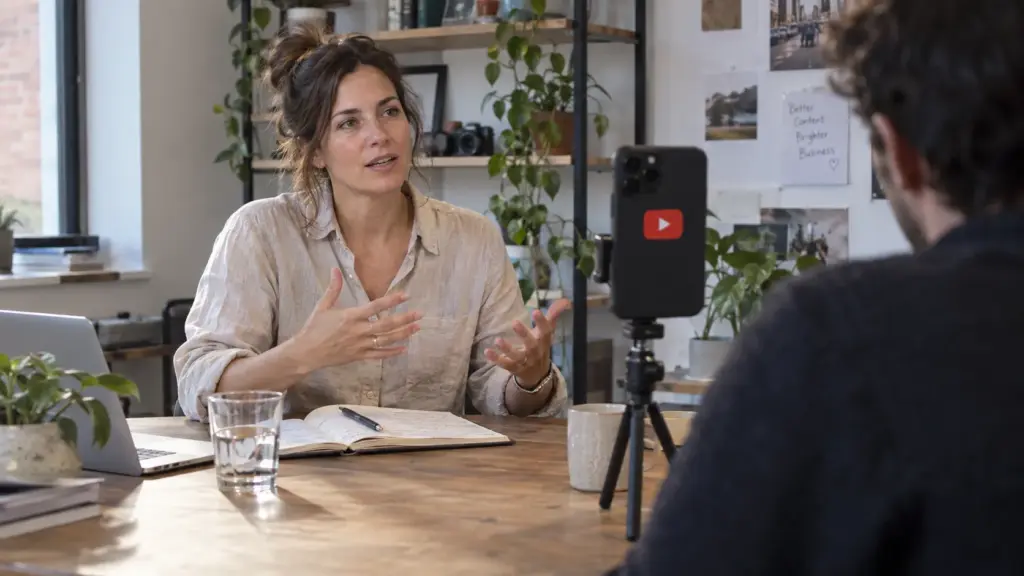
Aftermovie is a narrative object. We film for editing: movements, details, audience reactions, close-ups. He said, “What did we feel?” This distinction changes everything, including the device: a fixed camera is enough to capture a conference, it will never be enough to produce a good aftermovie, which requires mobility, multiple angles and a capture thought upstream. The two deliverables are complementary: many companies order both on the same event.
Why it is the most profitable asset of your B2B event
A corporate event is expensive: venue, caterer, stakeholders, logistics, team time. Most of this value disappears the same evening. Aftermovie is the only deliverable that extends this investment well beyond the date.
A shoot, weeks of content
The real strength of the aftermovie is the Recycling. From a single day of capture, we decline:
- the master film of two to three minutes, for the site, post-event emailing and internal replays;
- short vertical formats (shorts, Reels, TikTok) where each highlight becomes a publication;
- snippets tailored for LinkedIn, where we see your teams, your customers and your partners;
- a teaser to announce the next edition and speed up registration.
This recycling falls on favorable ground: according to the annual State of Video Marketing study by Wyzowl91% of businesses now use video as a marketing tool. And LinkedIn says video posts generate about five times more engagement than other formats. In other words, a single shoot can fuel several weeks of online presence.
Un teaser video can offer an initial glimpse of the event before the full aftermovie is released.
A social proof that nothing replaces
Show a full room, customers who trade, partners who speak with you: this is a commercial proof impossible to manufacture otherwise. According to Wyzowl, users are twice as likely to share a video as any other type of content, and an aftermovie is precisely the content that your participants want to reshare, since they appear there.
The effect also plays internally: an event film feeds the Employer Brandbecause showing a company that is alive, that brings together and celebrates, attracts candidates much more than a static career page.
What event deserves an aftermovie?
As soon as an event brings together your stakeholders and releases a collective energy, it deserves to be filmed. Here are the most common cases in B2B, with what the film brings to everyone.
Seminar and internal convention
To define what needs to be shown to employees, our guide to internal communication video helps choose the message and its broadcast channel.
An annual seminar or a trade agreement are expensive and rare moments of cohesion. Aftermovie serves two audiences: internally distributed, it extends the collective momentum and thanks the teams; externally distributed, it shows an attractive corporate culture. For an industrial mid-marketer struggling to recruit technical profiles, two minutes of filmed convention say more than a long speech on “our values”.
Trade Show
On a salon, your stand disappears when disassembled. An aftermovie captures the affluence, product demonstrations and exchanges with visitors, and transforms three days of presence into reusable content all year round. It is also a valuable internal tool: it helps to justify the investment fair to a director who asks what these three days have reported.
Evening customers and partner event
A client evening or an event co-organized with a partner are proofs of a relationship. The film shows that your customers come, participate, smile, an argument that your salespeople can slip into a sales cycle. For a consulting firm or a SaaS publisher, it is the visual demonstration of a living ecosystem.
Real case: the AWS x Reply event at the Maison de la Radio
We produced the aftermovie of the event organized by AWS and Reply at the Maison de la Radio, in Paris. A strong place, an audience of experts, conference times and more informal moments of exchange. The objective: to restore both the seriousness of the content and the energy of the encounter, in a film able to live on the networks of both brands. The result is visible in our AWS x Reply Case Study, among our others Projects.
To prepare the two times of your event communication, consult our advice on the live streaming of company during the event and the editing ideas Aftermovie Seminar after this one.
L’aftermovie AWS x Reply directed by Biux returns a professional event to the Maison de la Radio. It illustrates the combination of conference sequences and exchange moments that allow to tell a meeting without delivering the full replay.
How much does a company aftermovie cost?
There is no single price, and beware of those who advertise one without asking questions. The budget depends directly on the catchment system and deadlines.
The five factors that make the price vary
- The duration of capture. A half day costs less than a two-day event to cover continuously, sometimes with two teams in relay.
- The number of cameras. A camera is enough for a simple recap; the multi-cam makes it possible to cross the angles and not to miss any simultaneous high time (plenary and workshops, for example).
- The drone. Useful for the overall plans of a large site or a remarkable place, it adds a dedicated service and sometimes flight authorizations.
- Hot interviews. Collecting feedback from attendees, customers or executives during the event adds sound and meaning, but requires a device Interview in its own right: microphone, light, quiet corner.
- Timing of editing. A delivery within fifteen days follows a normal rhythm; an express version the next morning (to bounce during a show still in progress) mobilizes an editor in absolute priority.
The formats and prices of the Biux pricing guide
Aftermovie, full capture and live are separate deliverables. Their price does not correspond to three levels of the same service:
| Format | Usage |
|---|---|
| Aftermovie | Story of the highlights of the event |
| Filming | Recording of interventions |
| Live streaming | Livecast and replay |
The estimate defines the device, the interviews and the expected versions. The Video rate grid specify these offers; our page aftermovie presents the event format.
Are you planning a business aftermovie? Describe your event in two minutesBiux returns to you with precise cost estimate.
How to brief your capture team?
The quality of an aftermovie is played before the event, not in the editing. A cameraman who discovers the program in the morning will inevitably miss key moments. The method we recommend is in six steps:
- Define the end use first. A movie for LinkedIn, for internal or to sell the next edition calls neither the same tone nor the same plans. We leave the exit, not the camera.
- List the highlights not to be missed. Opening keynote, award ceremony, product announcement, CEO’s statement: identify them at the right time so that the team is in the right place at the right time.
- Designate key people. Who to interview in hot, who must appear, who prefers to stay out of the field. Warn them beforehand: the reactions will only be more natural.
- Communicate the constraints of the place. Filming permissions, prohibited areas, brightness, feasibility of the drone, right to the image of the participants.
- Set the deliverables and deadlines. A long version plus two short formats, in fifteen days or in express: frame it contractually from the start.
- Provide a single point of contact on D-Day. A person on your team who knows the program and can report an unexpected event to the filming team in real time.
An integrated team (director, cameramen and editors who work together on a daily basis) secures this process better than an assembly of freelancers who discover themselves on D-Day.
Le merger film Next Mobiles x Mobile Club directed by Biux accompanies a highlight of business life. It is not a conference capture: it illustrates the importance of defining the narrative and the shots expected before the production.
Mistakes that ruin an aftermovie
Some event films fall flat for avoidable reasons. The most common:
- Confound aftermovie and report. Wanting to show each speaker and each workshop produces an eight-minute film that no one watches to the end.
- Neglect the sound. Unchosen royalty-free music or inaudible interviews break the emotion, regardless of the quality of the image.
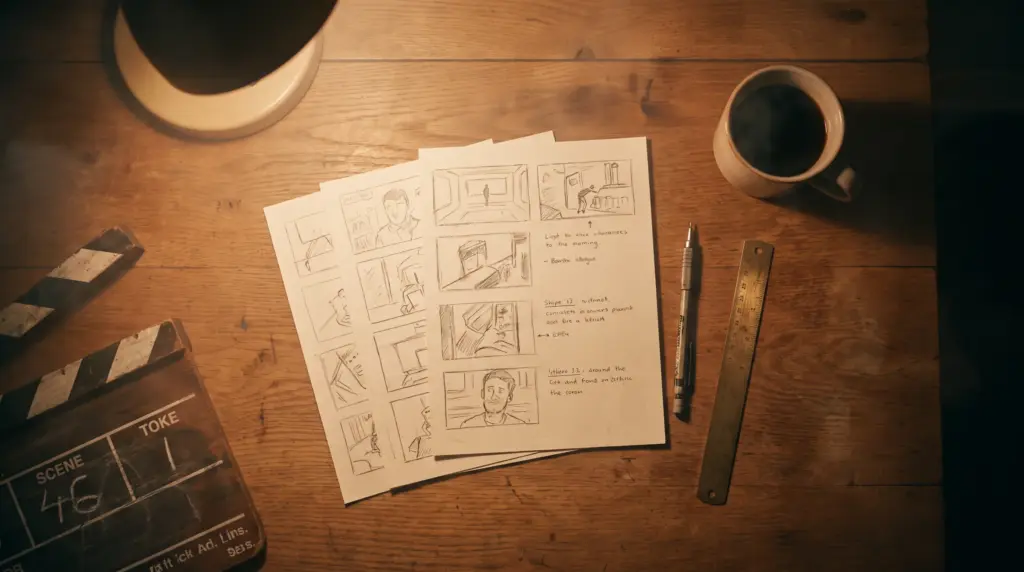
- Filming without a shooting plan. Without a list of highlights, the team films “what happens” and the editor lacks material at decisive moments.
- Deliver too late. An aftermovie published six weeks after the event lost most of its social value: the participants moved on.
- Forget the adaptations. Delivering only a horizontal format of three minutes means giving up half the value of the shoot.
This social video SMASH Group produced by Biux shows a format designed for short distribution on networks. It is used as a comparison to prepare the variations of an event, without presenting this capsule as an undocumented aftermovie extract.
Key takeaways
An aftermovie is not a shortened capture: it is a narrative object designed to move and recycle. In B2B, it is often the most cost-effective deliverable of an event, as only one shoot feeds weeks of content on LinkedIn and networks. And his success is decided in the brief, even before the foreground. If you have an event to come, it’s best to think about it early.
FAQ: the company aftermovie
What is the ideal duration of an aftermovie?
Between one and three minutes for the main film. Less than a minute, we tip into the teaser; beyond three, attention stalls, especially on social networks. The good practice is to produce a master film of about two minutes, then vertical adaptations of 15 to 45 seconds for LinkedIn, Instagram and TikTok.
How long does it take to receive the film after the event?
the Biux pricing guide indicates 15 days after the event for an aftermovie. Prepare the expected versions and validation circuit before shooting. An intermediate delivery requirement must be included in the estimate: it does not automatically arise from the main offer. The schedule should make it possible to organise the broadcast with the teams who will receive the film.
Do you have to ask for the participants’ permission to film them?
The right to image is prepared before the broadcast. For a communication film, do not consider that an on-site display automatically replaces the authorization of an interviewee or individual. Specify the intended uses and collect the necessary agreements. Public Service distinguishes between authorization and exceptions relating, in particular, to the right to information They do not cover any promotional communication without distinction.
Can you do an aftermovie with just one camera?
Yes, a mobile framer can return an event whose highlights do not take place simultaneously. The device depends on the program and the interviews to be recorded. The estimate shall specify the means necessary for the deliverables.
What does the aftermovie offer include?
The grid provides for a day of capture, a montage of 1 to 3 minutes, the music and the expected variations. The estimate specifies the shots, interviews and output formats. A full replay or live broadcast meets another need and must be identified separately within the scope.
Should vertical versions be planned before shooting?
Yes, the expected ratios influence the framing and selection of plans. Indicate the channels, messages and people to be kept visible in the clips. Vertical editing can require a suitable rhythm and subtitles. Preparing these versions from the brief avoids finding out after the event that an important plan is not working well.
Explore related guides
Plan the schedule, access arrangements and travel before your event.