
A corporate storytelling video organizes a message around a story: a person encounters an obstacle, acts and sees a transformation. The story gives a guide to interviews, scenes and editing. For B2B communication, it must remain anchored in documented situations and help the viewer understand what is changing, without inventing results.
Video storytelling is the ability to turn corporate communication into a story that people remember, share, and influence their decision. Where a factual pitch lists your services, a well-constructed narrative creates a lasting emotional connection between your brand and your prospects.
In this article: why stories work where facts fail, the three narrative components of an effective video, a 5-step method to build your narrative, and the most common mistakes to avoid.
Why Stories Mark Where Facts Slip
The brain does not treat a story as data.
When you expose isolated facts to your audience, whether they are numbers, characteristics or client references, only one brain zone is active: language processing. When you tell a story, several areas are simultaneously active: those associated with sensory experience, emotion and movement. The brain literally lives the described situation.
According to a study cited by Stanford University and relayed by researcher Jennifer Aaker, the stories would be memorized 22 times better than facts presented in isolation. In terms of message retention, the numbers are just as telling: 95% of a video message is retained by the viewer, compared to 10% in text (Insivia).
For a B2B SME, this radically changes the question before producing a video. Not "how well to present yourself," but "what story can we tell that resonates with our prospects."
What storytelling brings to your B2B communication
A well-constructed video narrative fulfills three functions that factual communication cannot fulfill alone.
First, it strengthens the memorability of your brand. Your prospects see dozens of content per week. A video that tells them a concrete transformation, carried by a character with whom they identify, will remain. The PowerPoint presentation will not remain.
Then, it creates an emotional link with your prospects at stages of the shopping cycle where they are not yet actively searching. According to the Wyzowl State of Video Marketing 2026 annual study, 85% of people report that a video convinced them to buy a product or service. It is a reinsurance lever and preferably brand that operates well before the first commercial contact.
I mean, he’s different. In a B2B market where offers are often perceived as fungible, your company’s history, the people who make it live and the customers you helped transform cannot be copied by a competitor.
The 3 components of a video story that works
The protagonist: the customer, not your company
The most frequent error in B2B video: the company tells itself. "We are leaders, we have X years of experience, our team is passionate." This kind of egocentric discourse does not create any identification in the viewer.
The right approach: your client is the hero. Your company is the ally that allows it to succeed. This reversal, popularized by Donald Miller’s StoryBrand framework, completely changes the narrative dynamic. The protagonist is the industrial SME which seeks to recruit engineers. Your agency is the mentor who gives them the tools to solve this problem.
Le film Accor D&TS directed by Biux gives a face to the organization through its teams. It illustrates the role of incarnation: a business story relies on people and an activity, not just on trademark declarations.
Conflict: what makes a video memorable
No tension, no attention. A story without obstacles to be overcome is a succession of affirmations, not a story.
Narrative conflicts applicable in the B2B context are numerous: a growth challenge, a recruitment difficulty, a reputation issue, a post-repurchase or post-crisis transformation. The choice of conflict must be recognizable by your target audience.
A concrete example: a video brand employer that starts from the problem "we can’t recruit young engineers while our jobs are exciting" will be infinitely more effective than a video that lists the advantages (open space, baby football, telework). The first one creates identification. The second one looks like everyone.
Le merger film Next Mobiles x Mobile Club shot by Biux accompanying a transformation of business life. This context provides a concrete narrative issue, without the need to invent a conflict or commercial results to create a story.
Resolution: Show the transformation, not the product
The resolution of a corporate video narrative is the credible before/after. Not a sales pitch, but proof that something has changed through your intervention.
In practice, customer testimonial video Well built does not list the services used. It shows the initial condition of the client, the journey and a documented change. The client can tell a user a simpler usage or explain what has changed in his activity; the encrypted results must come from his data.
To choose the structure that suits your message, discover our seven storytelling techniques illustrated by Biux achievements.
Le film A4 Concept produced by Biux presents a real estate activity in its environment. It illustrates the place of concrete scenes in a narrative: the images give the viewer elements to understand the professional universe presented.
5 Steps to Building Your Video Storytelling
Step 1: Define the central message (one sentence, one issue)
Before writing a script, a rule: If you can’t summarize in a sentence what your video means, go back to step zero.
This "one-liner" is the driving thread of all production. Example B2B: "We help industrial SMEs attract engineers by showing what is really going on in their workshops." One message, one issue, one direction.
Step 2: Choosing the protagonist and his challenge
Who carries the story? The founder, an iconic collaborator, a transformed customer, or the collective team? There is no universal answer, but the protagonist must be recognizable by your target audience. An HR manager must be able to identify with a HR manager’s challenge in the video. An SME manager must recognize his own growth issues in the main character.
Step 3: Structure into 3 acts (context, tension, transformation)
The narrative structure in 3 acts is the foundation of all narratives that have been working for millennia. In B2B video, it simply translates:
| Act | What it contains | Question to be resolved |
|---|---|---|
| Act 1: Background | Initial situation, presentation of the protagonist and his world | Who’s in this situation? |
| Act 2: Tension | The challenge or obstacle to overcome, which creates the challenge | What obstacle is preventing progress? |
| Act 3: Transformation | What has changed: the visible result and emotion of the resolution | What really changed? |
Each act must be summed up in one sentence. If one of them is empty of substance, the narrative structure is weakened.
Step 4: Choose the format adapted to the story
The format is not a technical constraint: it is a narrative decision. Some stories are naturally embodied in a corporate film, others in a collaborator portrait or a video selling letter. Here are the B2B formats and their natural narrative angles:
| Format | Natural narrative angle | Recommended duration | Main Network |
|---|---|---|---|
| Corporate film | Company history, founding vision | 2-3 min | Website, LinkedIn |
| Customer testimonial | Customer transformation (before/after) | 60-90 s | LinkedIn, Sales |
| Employer branding video | Daily team, embodied values | 60-90 s | LinkedIn, jobboards |
| Motion design | Abstract concepts rendered narrative | 60-90 s | Website, ads |
| VSL | Problem-solution-proof-CTA | 3-8 min | Landing page |
Step 5: Treat the 3 Emotional Triggers
A video story works when it activates three triggers simultaneously. Authenticity: show behind the scenes, real gestures, real people, not a smooth speech of success. Emotion: Each scene must produce a reaction in the spectator (curiosity, empathy, admiration). Clarity: less is more, one central message per video, never two.
The 7 Rules of Effective Video Storytelling
Rule 1: Have a true story to tell (not a catalogue)
A story begins where there is a real stake. If your script is a list of services and references, it’s not storytelling: it’s a filmed brochure.
Rule 2: Structure into 3 acts (trigger, peak, resolution)
The narrative structure is not optional. The triggering incident creates the stakes, the apogee amplifies the tension, the resolution frees the emotion. Without this mechanism, the viewer will drop out.
Rule 3: Make the hearing identify with the protagonist
The spectator must recognize in the protagonist his own challenges, fears or aspirations. A SaaS startup does not identify with the story of a CAC 40 group. Identification is the condition of engagement.
Rule 4: Stimulate emotion (dopamine, ocytocin, endorphine)
Emotions are not a supplement in a video story: they are the driving force. Dopamine creates anticipation, oxytocin creates proximity and trust, endorphine creates pleasure and desire to share. Each scene must target one of these reactions.
Rule 5: Maintain the rhythm (each scene has a function)
Each plane, each interval, each cup must serve the narrative. A scene that brings nothing to the narrative unfolding, even aesthetically beautiful, weakens the overall rhythm and invites the viewer to take off.
Rule 6: Stay simple (one message = one video)
The temptation to say everything in a single video is the most common mistake. Values, services, testimonials, processes, team: choose a single central message per video, and build a coherent series if several topics are to be covered.
Rule 7: Be authentic (the spectators instantly detect the fake)
A video too corporate, too smooth, too perfect, loses credibility immediately. Vulnerability, backstage and real people create trust. And trust precedes the purchase decision.
The 4 Pillars of Brand Storytelling
Pillar 1: Authenticity: anchor your story in reality
Show behind the scenes, everyday gestures, teams in real work situations. A true video always surpasses a memory-perfect video because it activates the brain areas of the lived experience.
Pillar 2: The singular values: what differentiates your history from all the others
Each company has a unique founding story: the trigger moment, the challenges overcome, the first victory, the choices assumed that defined the culture. This proprietary story cannot be copied. This is precisely where your deepest differentiation lies.
Pillar 3: Human Incarnation: Give a Face to Your Brand
Brands don’t tell stories. Humans, yes. Founders, collaborators, transformed customers: they are the characters of your story. The Employer branding video is the most direct example of this pillar: it does not sell the company, it shows the people who make it live.
Pillar 4: Emotion: from the spectator to the client
Structure your story around the aspirations and fears of your B2B audience. A sales manager aspires to accelerate his sales cycle. A HR manager is afraid of not attracting the right profiles. Hero + conflict + sincere resolution facilitated purchase decision. Emotion is not a narrative accessory: it is the bridge between history and action.
Mistakes That Kill Video Storytelling
Putting the company at the center instead of the customer
Talking about yourself, your values, your certifications, your history, without ever making room for the customer’s challenge, produces a video that nobody watches until the end. The spectator can’t find himself there. He has no reason to invest his attention in it.
Want to say it all in one video
The result: a diluted message, scattered attention, a narrative without a spine. A video a central message a protagonist a narrative arc. To communicate on five topics, produce five short videos. They will each have more impact than a single six-minute video that tries to cover everything.
Confounding storytelling and commercial testimony
A testimonial that lists the features you like or the reasons to recommend is not storytelling. A true story of transformation, built in 3 acts with an identifiable protagonist and a visible result, is storytelling. The difference: one creates trust, the other creates identification and emotion.
Neglecting structure in favor of aesthetics
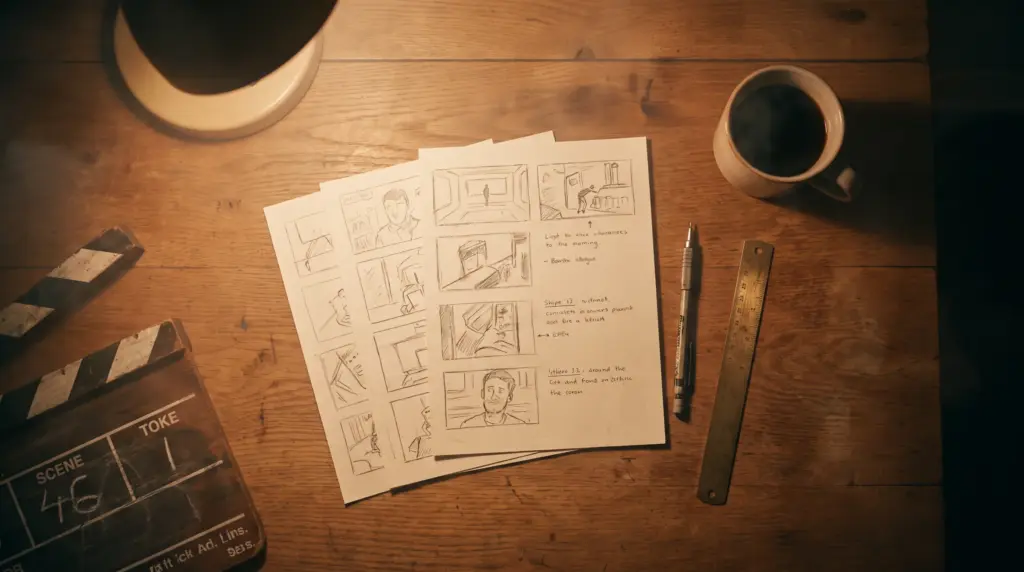
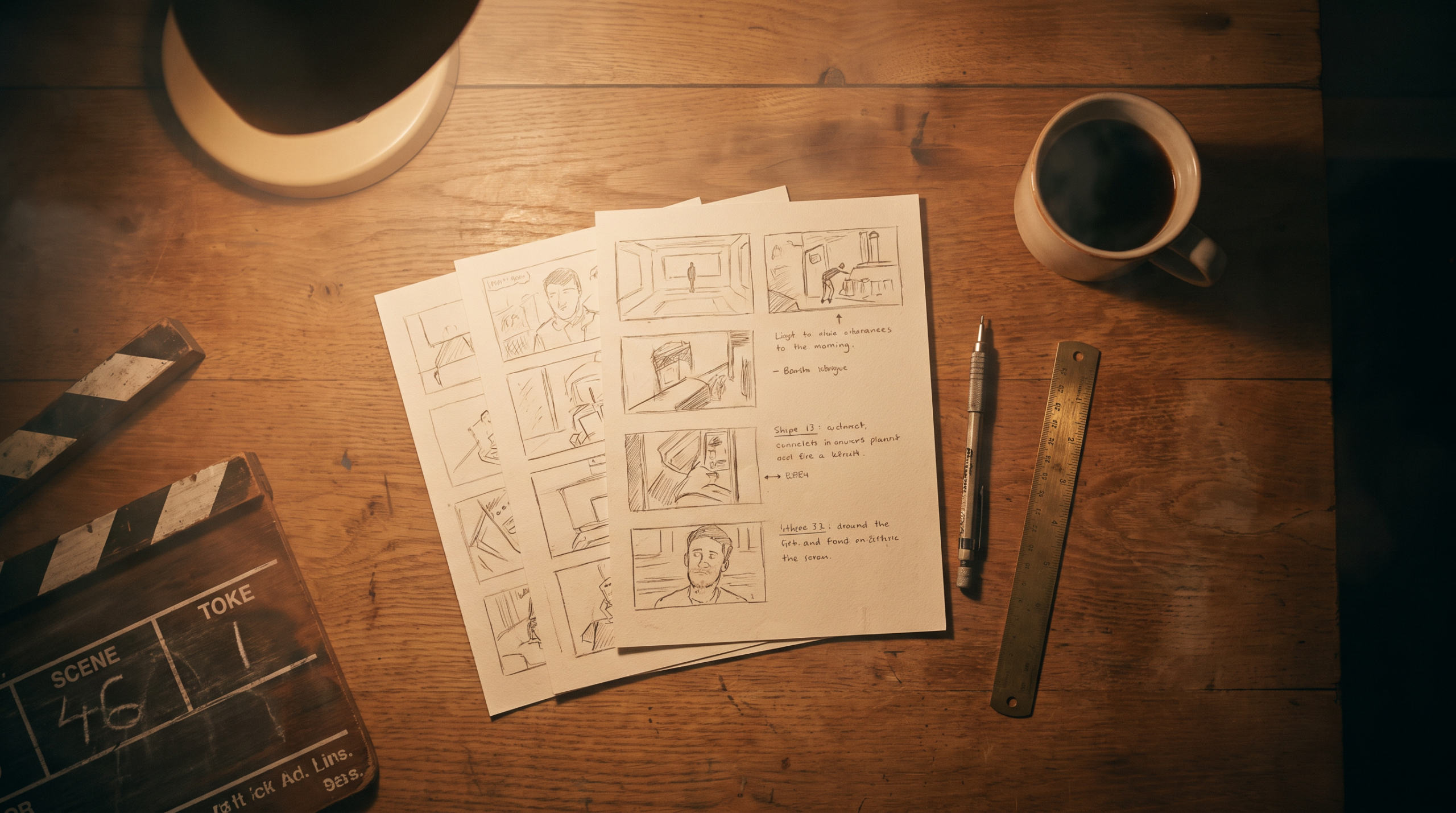
A beautifully filmed video, with a perfect soundtrack and dynamic editing, but without a narrative diagram, does not fulfil its function. The shape serves the background, never the opposite. Pre-production links the brief, script and storyboard to organize what will be said and shown. Investing in the realization without investing in the narrative structure is building on sand.
You’re preparing a video to tell your company’s story? Describe your project in two minutesBiux returns to you with precise cost estimate.
FAQ: Frequently Asked Questions about Storytelling Video
How to Make a Video Storytelling for Your Business?
Start with a unique central message, identify the protagonist, often a client or collaborator, structure in 3 acts (before / challenge / transformation), choose the appropriate format from institutional films, testimonials or Employer Brand Videos, and entrust the realization to an experienced team. Pre-production links the brief, script and storyboard to organize what will be said and shown.
What are the 5 stages of video storytelling?
- Define the central message (one-liner)
- Choosing the protagonist and his challenge
- Structure in 3 acts (context, tension, transformation)
- Choose the right format for the story
- Care for the 3 emotional triggers: authenticity, emotion, clarity
What are the 4 pillars of brand storytelling?
Authenticity (anchoring in the real), singular values (inimitable proprietary narrative), human incarnation (giving a face to the brand via collaborators and customers) and emotion (connection between the narrative and the purchase decision).
What are the 7 rules of storytelling?
Have a real story, structure in 3 acts, identify the audience, arouse emotion, maintain the rhythm, remain simple (a message by video) and be authentic. These seven rules apply to all formats. corporate film to the VSL conversion.
How much does a brand movie built around a story cost?
The concept, locations, stakeholders and means of production define its scope. A corporate film or testimony corresponds to another offer, detailed in the Biux rate grid storytelling is a narrative method, not a single tariff.
What is the time frame for a film brand and what does production include?
The production of a brand film Biux takes 4 to 8 weeks and includes writing, shooting and editing. The preparation is used to select the protagonist, situations and scenes necessary for the narrative. The estimate specifies the means of shooting as well as the versions expected for the different uses of the film.
Conclusion
Video storytelling is not a marketing trend: it is the way decisions are made since humans communicate. The numbers are forgotten. The stories remain. According to Insivia, 95% of a video message is retained against 10% in text: the narrative video is the most effective format to anchor your brand in the spirit of your prospects.
Going further, the annual Wyzowl State of Video Marketing report provides the latest industry data.
Do you have a story to tell and are looking for a team that can put it into pictures? Discover our corporate film production. We build the story with you, from pre-production to final delivery.