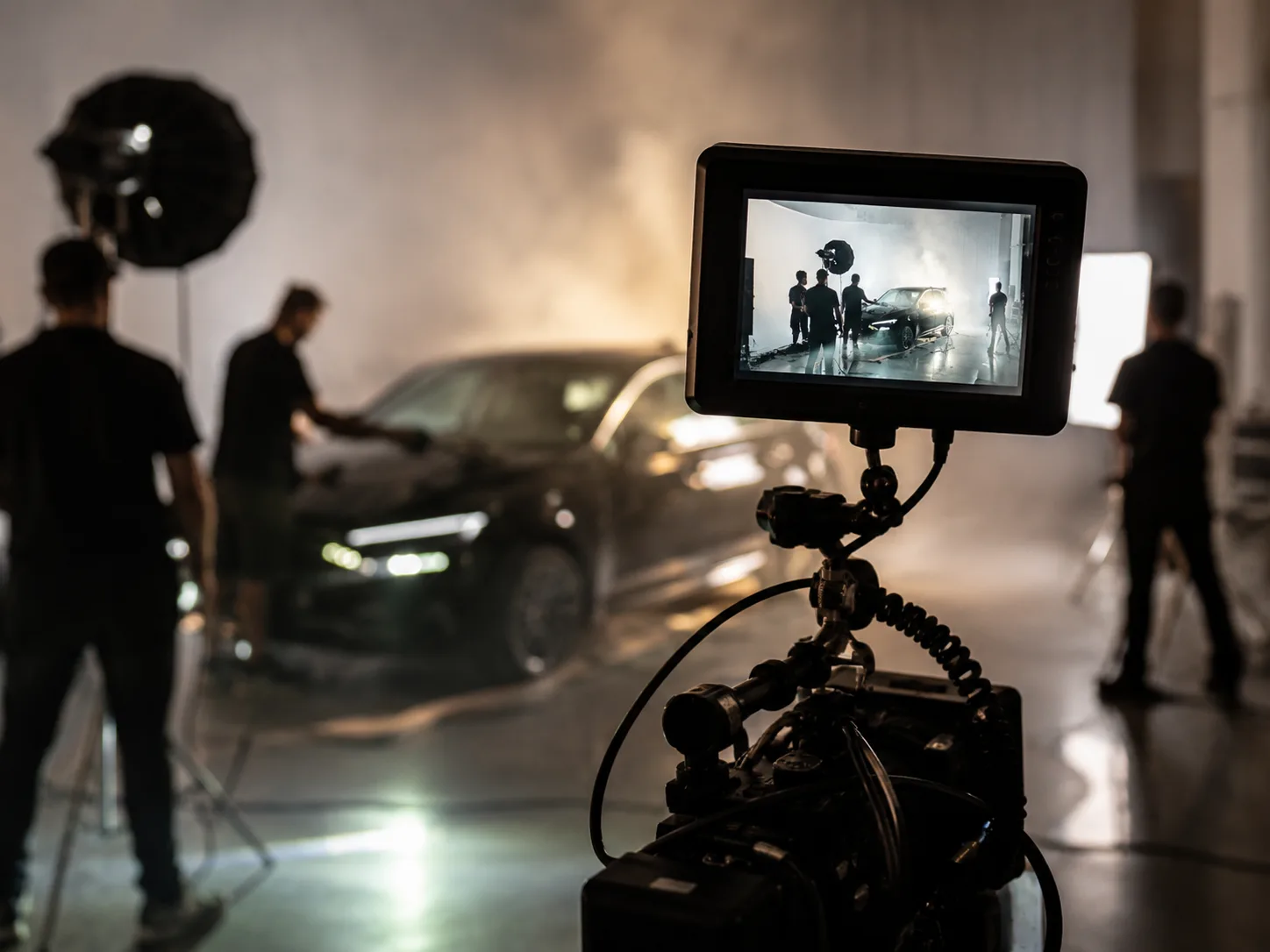

An advertising film promotes a brand, product or service to a specific audience. The budget covers the creation and deliverables ordered; the purchase of space remains separate. The broadcast channel guides the script, duration and variations.
Those are the right questions. And they deserve concrete answers, not "contact us for a quote".
This article is aimed at B2B decision makers, DirCom, marketing managers and founders who want to understand the video ad production market before getting started. We cover the types of films, real examples analyzed on the production side, budget benchmarks and the steps of the process on the customer side.
An important point of entry: the production budget (filming, post-production, variations) and the broadcast budget (purchase of TV spaces, SEA, programmatic) are two separate items. Biux covers creative production. The broadcast is managed by a media agency. Many prospects confuse the two: this article deals only with production.
What changed in 2026
Advertising tools expand the possibilities of declination, but the preparation of versions remains a creative decision. On 25 June 2026, Google has announced new ratios transformations for Demand Gen, in particular from vertical to square or landscape. The announcement is about expanding resizing features, not a quality guarantee of all resizings.
To produce your film, prepare a version whose message remains legible in each composition. A face, product or demonstration placed at the edge of the plane may disappear when the frame changes. Allowing this constraint to the storyboard allows you to choose the shots and the position of the texts before shooting. The editing must then be checked on the actual target holder.
The security areas published by Google Ads also remind that buttons and interface mentions can cover part of the image. Check the hanger, logo and call to action on each version. Technically accepted declination by the platform does not exempt a human rereading of the film, its subtitles and its commercial promise.
What is an advertising film?
An advertising film is an audiovisual production created to promote a brand, product or service to a targeted audience. It combines storytelling, image, sound and editing to produce a precise effect: brand awareness, conversion, engagement or recruitment.
It differs from an institutional film by its primary objective: to convince or trigger an action, not simply to present.
Commercial vs. corporate film: two different formats
Confusion between the two is common. The corporate film tells the story of a company: its values, its teams, its positioning. It is often addressed to partners, investors or potential candidates.
The advertising film, on the other hand, is aimed at a target customer with an explicit commercial promise. Its structure is designed to capture attention quickly and anchor a precise message. Both formats can coexist in a content strategy.
Why video advertising is essential in the B2B strategy
According to ARCOM (Audio-Video Trends 2026), 48% of French people aged 15 and over consume YouTube at least once a week, a proportion that rises to 70% among those under 35. In 2025, investments in online video advertising in France reached 1.402 billion euros, an increase of 18% compared to 2024, representing 60% of the total digital Display (source: 35th Observatory of the e-pub, SRI/Viuz, 2026).
These figures reflect a fundamental change: even in B2B, the video format has become the main vector of attention in decision-making processes. A well-produced ad on LinkedIn or YouTube can reach an entire buying committee before the first sales contact.
The commercial: definition and characteristics
An advertising spot is a short video format, usually from 10 to 30 seconds (up to 60 seconds for some digital contexts), designed to deliver a powerful and memorable promotional message in a minimum of time. The terms "advertising spot", "advertising spot" and "short advertising film" mean the same object of production.
The distinction with the advertising film is above all a question of duration and creative constraint. The spot is the shortest format in the advertising spectrum: every second is counted, a single central idea, a single promise. Where a brand film can develop a narrative over 2 to 3 minutes, the spot must anchor its message in a few images. This constraint is not a defect: it pushes to the essential and promotes memorization.
In terms of production, a commercial follows the same steps as a longer film (brief, storyboard, shooting, post-production), but with maximum attention paid to the first seconds. A missed spot in its first 3 seconds is an ignored spot, regardless of the quality of the sequel. For B2B companies that want to test the video advertising format, the production of advertising spots is an accessible and measurable entry point.
The main types of advertising films
Each format meets a specific objective, a different distribution channel and a different level of production investment. Here is a synthetic chart to guide your choice.
| Type | Main objective | Typical duration | Main Channel | Production budget benchmark* |
|---|---|---|---|---|
| TV Spot / Cinema | brand awareness of Mass | 30 seconds | National TV, cinema room | High (according to TV technical requirements) |
| Pre-roll YouTube / social ads | Conversion, traffic | 15 to 30 seconds | YouTube, Meta, LinkedIn | Accessible to intermediate |
| Brand film (brand film) | Image, long-term commitment | 1 to 3 minutes | YouTube, site, events | Intermediate to High |
| Video Sales Letter (VSL) | Direct sales, conversion | 2 to 10 minutes | Landing page, email, LinkedIn | Accessible to intermediate |
| Product Spot | Presentation, e-commerce | 15 to 60 seconds | Site, social networks | Accessible |
*Budgetary benchmarks vary according to brief, level of finish and variations. Each project is costed on estimate.
The TV and cinema spot
This is the historical format. Thirty seconds to anchor a brand, a slogan, an emotion. It requires careful production: casting, sets, calibration, post-production. The production budget is high because the technical requirements for TV broadcasting are strict. On the other hand, once produced, a TV spot can be declined on all digital channels.
Digital advertising (YouTube pre-roll, social ads video)
A YouTube pre-roll or LinkedIn sponsored video can be produced with a team adapted to the project. The constraint is to make the promise understandable from the beginning. On YouTube, InStream deactivated ads can be passed after five seconds; other placements follow different rules.
The Brand Film (Brand Film)
The brand film does not sell a product. It sells a vision, a positioning, values. Ideal format for B2B brand content strategies or companies with a strong emotional capital to value. Its longer duration allows a constructed narrative, close to documentary storytelling.
The Video Sales Letter (VSL)
La Video Sales Letter is a structured format to convert directly. It takes the codes of copywriting of sales transposed into video: hook, problem, solution, proof, CTA. Widely used on landing sales pages, LinkedIn tunnels and video email campaigns. Its effectiveness is based on the script as much as on the production.
The Product Spot
Designed to highlight a specific product: its features, its use, its differentiators. Very common in e-commerce and industry. The motion design is often integrated into this format to animate technical elements or visual comparisons that are impossible to shoot live.
Examples of successful advertising films
The analysis of significant campaigns helps to identify the creative mechanisms that work, regardless of the distribution budget.
Le merger film Next Mobiles and Mobile Club put in story a corporate announcement. This project, Biux, illustrates the work of preparing a message and a brand narrative; it is not, on its own, a media purchasing campaign.
Intermarket, "The Vegetarian Wolf" (Christmas 2025) : a short branded film built on breaking storytelling. The brand does not talk about price or promotion: it humanizes its relationship to eating well through an unexpected character. The creative concept is simple, the writing is neat. Our analysis of this production is available in our analysis of the Intermarché pub.
Oasis, the recurring characters : an example of long-term advertising brand content. Each spot is designed as an episode of a series. Visual and narrative consistency between formats creates immediate brand recognition. The production process involves a stable graphic universe and documented artistic direction from pre-production.
Michel and Augustin, the authentic formats : the brand has built its brand awareness with low-budget films shot in realistic conditions, with its founders in front of the camera. What might have seemed amateurish has become a strong positioning choice. For SMEs, this is an important signal: a good concept and a fair writing matter more than a high production budget.
What these examples have in common: a strong central idea defined before the first day of shooting, and consistency between the message and the format chosen.
La VSL produced for 5000.dev has a sales-oriented format. It complements the examples of branded films by showing a speech designed to develop an offer, an argument and the next action expected.
This VSL for Mozar is another example of commercial video produced by Biux. Comparing the two films makes it possible to work the articulation between the presentation of the service, the evidence and the invitation to continue the exchange.
What are the budget benchmarks for producing an advertising film?
The production budget of an advertising film depends on many parameters: length of the film, number of days of shooting, casting, locations, variations. The benchmarks below give a market orientation; each Biux project is the subject of a personalized quote.
Digital spot, brand film and VSL do not cover the same work. The estimate distinguishes their scope; the broadcast budget is separate.
Entry level: short digital spot (15-30s)
A simple production, shot in a studio or in a single location with a light team, is the most accessible entry point. This level covers a social ads spot, a LinkedIn video or a simple product spot. The result can be broadcast immediately on digital channels.
Standard production: 30-60s all-channel spot
A 30 to 60 second spot with choice of venues, professional actors and careful editing is the most common range for SMEs and startups who want a versatile production, broadcast on digital and regional TV. At this level, the budget usually covers a full day of filming in a team, editing and the main variations.
High-end production: brand film and TV spot
Productions involving several days of filming, casting, special effects or an original musical composition correspond to large-scale projects: national TV spots and brand films intended for long-term campaigns. The budget reflects the technical complexity and quality of finish expected.
What makes the budget different: the 5 levers
- The duration of the film : the longer the film, the longer the shooting and editing.
- The number of days of shooting : each day mobilizes a complete team (director, manager, sound taker, management assistant).
- The Cast Professional actors, spokespersons, extras or internal collaborators have very different costs.
- Sets and places : rented studio, simple exterior or reconstructed decor do not involve the same budget lines.
- The adaptations : producing multiple formats from a single shoot optimizes the ROI but requires a specific production plan from the start.
To encrypt your project, you can consult our page dedicated to the production of advertising films.
You’re planning a commercial? Describe your project in two minutes, Biux returns to you with an cost estimate of production and versions.
How to make a commercial in 5 steps?
Making a short commercial (10 to 30 seconds) follows a tagged process. Each step conditions the following: a gap in brief is paid in editing. Here are the 5 key steps from concept to deliverable.
1. The creative brief and the unique message
A 10 to 30 second spot can only carry one master idea. First of all, clearly define the goal (brand awareness, conversion, product launch), the precise target and the central message. The tighter the brief, the more impactful the concept will be. A vague brief produces a lukewarm spot. For projects that require a distinctive creative angle, Biux develops the Creative Advertising Concepts before the shooting.
2. The storyboard and the script
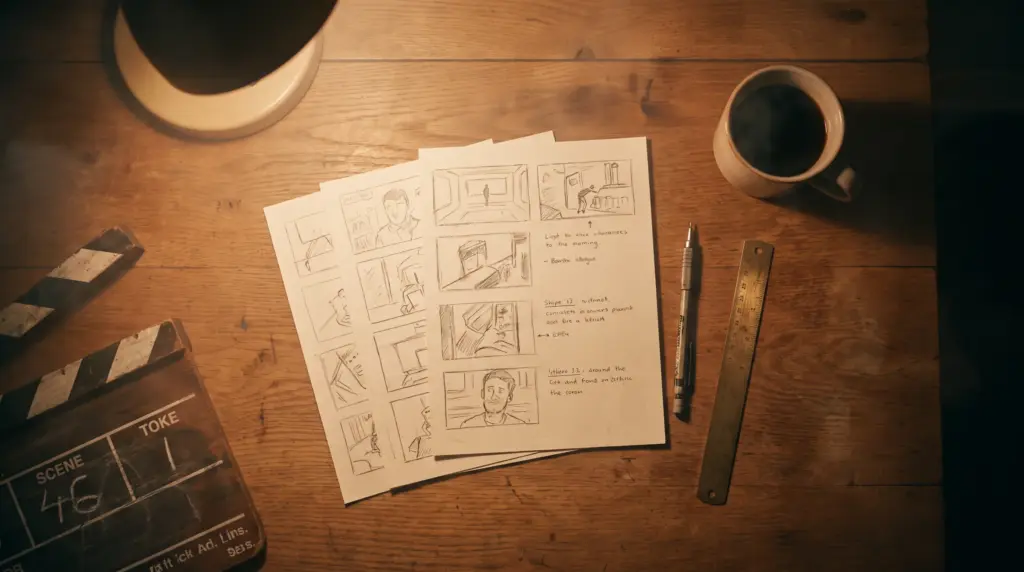
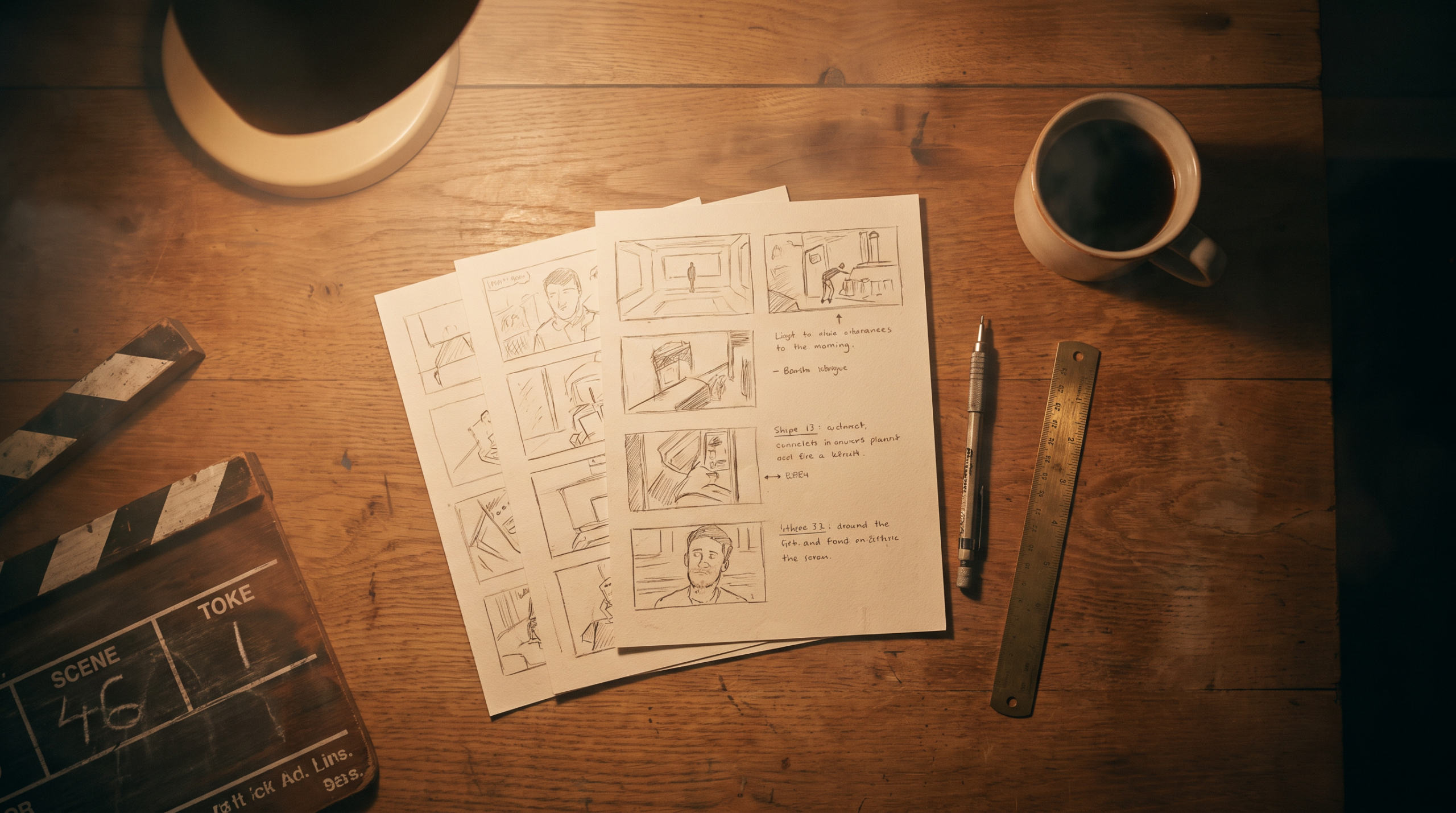
The storyboard formalizes each shot: framing, camera movement, text on the screen, planned voice-over. For a spot, the hook of the first 3 seconds is decisive, especially on YouTube pre-rolls where the viewer can zap. Validating the storyboard before filming avoids costly post-production corrections: an upstream modification takes 10 minutes, the same modification after filming can represent several hours of editing.
3. Production and filming
The technical team is mobilized at the filming location: audiovisual production, light, sound. For a short spot, the shooting day is optimized to capture a maximum of usable rushes, including the variants required for multi-format variations. Thinking the formats from the set (horizontal 16:9, square 1:1, portrait 9:16) avoids a second shoot.
4. Voice-over and sound
The sound component is often underestimated in a commercial. The voice-over, the musical graphics and the mixing contribute as much as the image to the memory impact of a spot. Within seconds, a jingle or sound signature can anchor a brand in a lasting way. The final mix must be adapted to the constraints of each channel (TV, mobile without sound, cinema).
5. editing, colour grading and adaptations
The editing of a short spot is a work of precision: each cut, each change of plan must serve the rhythm and the message. The colorimetric colour grading gives visual consistency to the film. The final step is the production of variations according to the channels: 15 seconds for the social pre-roll, 30 seconds for the standard TV format, subtitled version for autoplay without sound. A single well-planned shoot can cover five distinct formats.
The production steps on the client side: brief, storyboard, shooting, deliverable
Understanding the process allows you to better prepare your brief and save time at each step.
Brief and strategy (what you need to prepare)
Before contacting an agency, clarify four points: the objective of the film (brand awareness, conversion, recruitment), the target (persona, planned distribution channel), the central message (only one idea per film), and the budget envelope. The more accurate your brief is, the more relevant the creative proposal will be and the right quote.
Concept and storyboard (what the agency submits to you)
The agency translates your brief into a creative concept: narrative angle, tone, visual structure. The storyboard formalizes each shot: framing, camera movement, texts, voiceover. This step is decisive: validating the storyboard before filming avoids costly post-production corrections.
Filming and post-production
The filming mobilizes the technical team on site: realization, light and sound. Post-production includes editing, colour grading, mixing and ordered graphic elements. At Biux, the overall published deadline for an advertising spot is 3 to 6 weeks. Validations of the concept and versions are organized in this calendar.
Multi-format adaptations: the "multiple effect"
This is one of the strongest ROI arguments for planned production. By filming more rushes on the same shoot, we can produce several formats in parallel: 30s TV version, 15s pre-roll version, Instagram square version, LinkedIn portrait version, YouTube long version. One shot, five channels covered. The additional cost of production is marginal compared to the amplification of the diffusion.
FAQ: frequently asked questions about the commercial and the film
What is the difference between a commercial and a commercial?
A commercial is the short version of the commercial: 10 to 30 seconds, one idea, one promise. The advertising film refers to the entire spectrum of commercial video formats, from short spot to brand film of 3 minutes. In practice, the two terms are often interchangeable in customer briefs, but duration and creative constraint differentiate the two objects. Every commercial is an advertising film, but every advertising film is not a commercial.
What is the difference between an advertising film and a corporate film?
The corporate film presents the company (values, teams, history) and is aimed at partners, recruits or investors. The commercial film carries a commercial promise and is aimed at a target customer with the objective of triggering an action or anchoring a brand message. Both formats can coexist in a coherent content strategy.
How much does it cost to produce a commercial or commercial film?
The estimate specifies the preparation, the shooting, the post-production and the versions ordered. The purchase of advertising space remains a separate budget.
What is the ideal length of an advertising film?
The duration depends on the format and channel. For social networks and YouTube pre-roll, 15 to 30 seconds is the norm: beyond that, attention drops. For a TV spot, 30 seconds remains the standard. For a brand film or a VSL broadcast on a landing page, 1 to 5 minutes is acceptable if the script is solid and hooks immediately.
Do you need multiple versions of an advertising film?
Yes, and it is even recommended from the brief phase. Plan the adaptations before filming allows you to film the necessary elements in a single session. Result: a 30s TV spot, a social cut 15s, a mobile portrait version and a version with subtitles are produced for a limited additional cost. This multi-format approach optimizes the overall return on investment of production.
How long will it take to produce an advertising film?
Biux plans 3 to 6 weeks for an advertising spot. This calendar covers creative preparation, filming and post-production. Set the release date from the brief to organize casting, locations and validations. A brand film follows a separate calendar of 4 to 8 weeks according to the published grid.
If you plan to produce a film or a commercial for your company, our team accompanies you from the creative strategy to the final deliverable. Discover our approach on our page dedicated to advertising spots.