
The Intermarket advertising of the vegetarian wolf, Le Mal Aimé, tells a personal transformation rather than a commercial offer. Released for Christmas 2025, this film combines animation, music and brand narrative. For a B2B company, his interest lies in the construction of the character, the progression of his problem and the consistency between the story told and the positioning of the advertiser.
Intermarket didn’t make up the wheel. Emotional storytelling, cute animals, nostalgic music… all this has been around for decades. But this campaign has something different. Something that deserves attention, especially if you are a B2B company looking to create videos that generate real results.
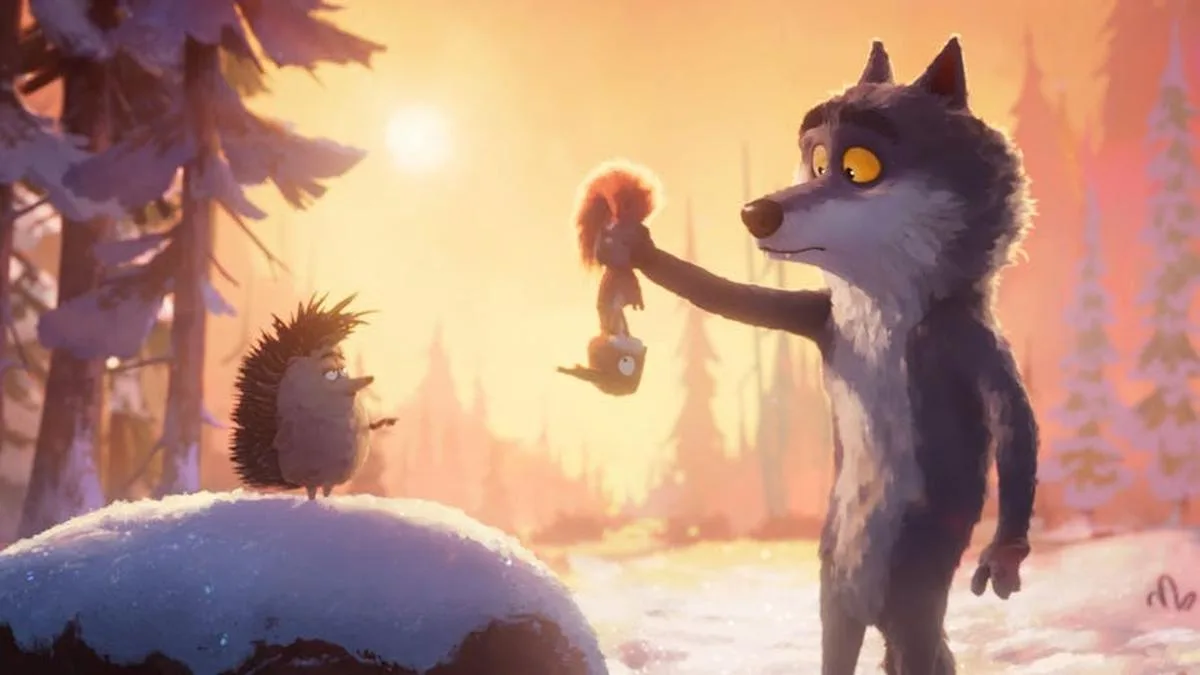
Le Mal Aimé staged for Intermarché, a wolf who learned to cook in order to share a meal with other animals. This film by Romance and Illogic Studios, which is not a Biux achievement, illustrates the progression of the rejection towards the membership analysed below.
The story behind the buzz: a creative bet against the current
December 2025. The big brands draw their Christmas campaigns. Coca-Cola focuses on artificial intelligence. McDonald’s made the same. And then arrives Intermarché with a short film of two thirty minutes, mixing animation and real shots.
The pitch is simple. A wolf, the famous "big bad wolf" of our childhood is found alone because all the animals in the forest flee him. He eats them. A hedgehog then suggests that he change his diet. To eat carrots, mushrooms, vegetables. The wolf performs, learns how to cook, and ends up being accepted at the Christmas banquet.
On paper, nothing revolutionary. In execution, everything is different. This audiovisual production is based on a work of more than one year, coordinated by the agency Romance and directed by the Montpelliérain Studio Illogic Studios, the same one who was appointed to the Oscars for his short film "Garden Party".
What this audiovisual production reveals about creative crafts
Seventy people worked on this project. From initial storyboarding to final compositing, character design, animation, textures and lights. Six months of pure production, not counting the design phases.
The film is based on the work of teams of animation, light and compositing. The testimony of Inès Martin, artist at Illogic Studios, describes this manufacture and the care given to the light. The painted aspect of the image does not mean that the film would be a succession of cartoons without modelling work: matter, movements and lighting together build this visual universe.
This choice of audiovisual production is not trivial. At a time when global giants are saturating screens with AI-generated content, Intermarché has made the opposite bet: authenticity and artisanal know-how. And the result speaks for itself.
Behind the scenes of a production made in France
The organization of the project deserves attention. The overall coordination was provided by the Parisian studio Wizz. The real-life parts, the family scenes around the tree were filmed by the director Nadège Loiseau via Divine Production. Fred Testot lent his voice to the wolf character, adding an extra dimension to the attachment that the viewer feels.
This network of French talents perfectly illustrates what a well-orchestrated audiovisual production can accomplish. Each link in the chain brings its expertise, sensitivity and know-how. The result transcends the sum of the parts.
Technology at the service of emotion
The visual rendering of the film borrows from what is called the "painterly" effect. This technique, which has become a reference since the success of the Arcane series (produced by the studio Fortiche), gives the impression that each image has been painted by hand.
The result? An aesthetic that breathes. Who lives. Who doesn’t look like those smooth, disembodied productions you see everywhere. This approach to audiovisual production creates a sense of closeness to the viewer. You can feel the human work behind each frame.
Storytelling as a Virality Engine
The strength of this campaign lies not only in its technical quality. It is mainly related to its narrative structure. The film does not sell vegetables. It tells a story of personal transformation, acceptance, living together.
The wolf is the one who is rejected because of what he is. Not because of what he does voluntarily, but because of his nature. And this is where the narrative becomes universal: we have all, at some point, felt this feeling of being sidelined.
The musical choice amplifies this emotion. "Le Mal-Aimé" by Claude François perfectly sticks to the skin of this lone wolf. Words resonate with history. Music acts as an emotional catalyst, transforming a simple advertisement into a real short film.
A tale that does not moralize
What distinguishes this audiovisual production from the usual food campaigns is its total lack of moralization. Intermarket doesn’t say "stop eating meat." The message is more subtle: "We all have a good reason to start eating better".
No injunction. No guilt. Just a sweet invitation, wrapped in a fable that touches the heart. The spectator is not asked to change his habits. He is simply invited to think about it, at his own pace, without pressure. And it is precisely for this reason that the film has crossed French borders to conquer the whole world, from the British Daily Mail to American social networks.
Lessons for B2B companies
So, what can we learn from this case study for our own video productions? Several things.
First, investment in quality pays off. Wyzowl (2025) confirms that 96% of those who watched an explanatory video were influenced in their purchase decision. A year of careful work, seventy people mobilized, a studio named at the Oscars. Intermarket didn’t do it half-way. However, this visibility does not allow us to calculate a return on financial investment without knowing the total cost of the campaign and the revenues attributable to it.
Second, the long format is not dead. Two thirty minutes for an advertisement is an eternity in our time of fragmented attention. Yet, people have looked to the end. Because history held them. Because the story was strong enough to sustain attention. This duration makes it possible to develop characters, to create a real narrative arc, to let the emotion settle gradually.
Thirdly, emotion transcends the industry. Intermarket sells food products. Not really the most "sexy" domain in the world. And yet, this audiovisual production has moved millions of people around the world.
The human being at the center of creation
The central place given to the work of artists sends a strong signal. In a world where technology can do everything (or almost anything), the brands that dare human craftsmanship stand out. This positioning particularly resonates with an audience weary of generic content and soulless visuals produced on the chain.
For us who support B2B companies in their Video StrategyThis is a valuable finding. Our clients: consulting firms, tech startups, service companies are looking to differentiate themselves. "hand-made" audiovisual production, carefully thought out, can become a real competitive advantage.
Audiovisual production as a vector of narrative transformation
This Intermarché campaign illustrates a paradigm shift. Advertising is no longer just about selling. She’s talking. It transforms. She creates a link.
The vegetarian wolf is not just a cute character. It is a symbol. The ability to change, to evolve, to adapt to live better together. And this message, carried by a high-quality audiovisual production, touches a universal chord.
Analysts talk about the "ecology of desire" rather than the ecology of constraint. Rather than making consumers feel guilty, the film makes them want to change. That’s subtle. It’s effective. And that’s exactly what any video content strategy should be about.
From Virality to Brand Authority
The buzz is not enough. What really matters is what’s left. And there, Intermarché scored points. The brand is now associated with quality audiovisual production, a positive message, a creative approach.
Even Michel-Édouard Leclerc, a direct competitor, publicly praised the performance on his blog. When your competitors applaud your work, it’s because you’ve done something right.
Create videos that generate concrete results
We often repeat to our customers that our goal is not to make "good videos" for pleasure. It’s creating videos that work. Which generate fame, credibility, leads.
The campaign of the vegetarian wolf proves that these two dimensions are not incompatible. An audiovisual production can carry an artistic ambition and a commercial objective. To evaluate the second, the results of the campaign must be monitored beyond the reactions generated by the film.
The secret lies in alignment. Alignment between message and execution. Between promise and proof. Between what the brand says and what it does. When everything is consistent, the magic happens.
The real lesson of this Intermarché campaign, finally, is this: in a world saturated with content, authenticity and care for audiovisual production become major differentiators. Brands that invest in true stories, driven by human know-how, reap much more than a fleeting virality. They build lasting authority. As pointed out ForbesBrands that invest in authentic video storytelling see their memorability increase significantly. And it’s worth all the billions of views in the world.
Transpose this story into a B2B video without copying the campaign
Taking back a wolf, a nostalgic song and a reunion scene would not take back the strength of this advertising. His interest comes from the link between the character’s problem and the brand’s promise. For a B2B company, the starting point can be a professional situation: a team that does not manage to share information, a manager who loses track of a decision or a user who does not dare to change tool. The difficulty must be identifiable before the solution appears.
First write the story without commercial adjective. Who’s meeting the problem? What is this person looking for? What is preventing him from achieving this? What change makes the situation better? If the answers are summed up in the name of your product and a list of features, the character’s point of view is still missing. A customer does not necessarily describe his/her need with the words of your catalog. Moving from one’s vocabulary helps create a scene that the viewer can recognize.
| Element of narrative | Translation possible in B2B | Evidence to be prepared |
|---|---|---|
| An identifiable character | A person facing a professional difficulty | A Live Situation, Described with His Own Words |
| A visible obstacle | Missing gesture, expectation or information | An understandable scene without abstract commentary |
| A progression | A change in the way we work | Useful steps, without misleading shortcut |
| A resolution | A result that the character can see | A Demonstrated Use or Awarded Witness |
| A brand signature | The promise that gives meaning to transformation | A real link with the company’s offer and commitments |
This table is used to prepare a scenario, not to impose fiction on all projects. An interview can follow exactly this progress. The person tells the initial problem, explains what has changed, and then gives an example. The montage reveals the logic of the narrative without having it make a promise that it did not formulate. The illustration plans make situations concrete; they must not only fill the moments when the discourse lacks precision.
The place of the mark then deserves an explicit decision. A final revelation is suitable for some accounts, while a commercial demonstration must quickly identify its subject. The broadcasting context varies: a person who discovers an advertisement does not have the same expectations as a prospect that comes to compare solutions. Also prepare the page or content that will take over after the film. An emotion may open the conversation, but it does not replace the information necessary for a decision.
What budget do you have for a brand story at Biux?
The Biux film brand includes concept, writing, filming, colour grading and music, with a calendar of 4 to 8 weeks. This is the published Biux scope, not an estimate of the budget of the Intermarket campaign. The price of a national advertising film cannot be deducted from its duration on screen or compared directly with a company’s production.
The form of the project remains to be chosen before comparing the benefits. The 2D motion design, the 3D and the brand film meet different needs. These are neither reduced versions of the Intermarket price nor sub-ranges reserved for a particular graphic style.
To prepare your application, describe the public, main message, available locations or stakeholders, and dissemination media. Also specify the elements that can be used: authorized testimonials, graphic chart, product demonstration and situations that you can actually show. This information allows us to discuss the means of production from a possible scenario rather than a spectacular reference detached from your constraints.
Our support in production of advertising films distinguishes the design of the narrative, its manufacture and the versions intended for dissemination. The Biux video rate grid compares the formats; the estimate describes the deliverables selected. Good arbitration is to protect what makes history understandable and singular, and then to adapt the means to this objective.
Are you planning a brand movie for your company? Describe your project in two minutesBiux returns to you with precise cost estimate.
FAQ
Who did the Intermarket Vegetarian Wolf advertising?
Romance designed the campaign for Intermarket with Illogic Studios for animation. The film combines an animated universe with real-life scenes. This is not a Biux realization: we analyse here as an example of advertising narrative and consistency between a story and a brand promise.
Why does this advertising work like a story?
The character pursues an easy-to-understand desire: to be accepted by others. The film shows its obstacle, its attempts and its transformation before concluding on a shared meal. This progress gives meaning to images and music. Our reading focuses on this narrative construction, without appreciating the reactions of the public to a measured commercial result.
How much does a brand movie at Biux cost?
the Biux pricing guide presents the agency’s offer, not the Intermarket advertising budget. The estimate specifies the concept chosen, the means of shooting and the deliverables in order to compare proposals covering the same scope.
How long will it take to produce a brand film?
Biux plans 4 to 8 weeks for his film brand offer. The calendar organizes the design, writing, preparation, shooting and finalization of the film. The availability of people, places and brand elements is prepared from the brief. This deadline does not describe the manufacturing of the Intermarket campaign presented here.
What does the Biux film offer include?
The brand film offer includes concept, writing, shooting, colour grading and music. The estimate details the deliverables of the project, including the versions planned for dissemination. Prepare your audience, your goal, and the situations you can show: these elements guide the story and production choices before starting production.
Does it take animation to tell a B2B story?
No. An interview, demonstration or film shot in the company can tell a transformation if the problem and progress are visible. Animation is useful for building a universe or representing a difficult situation to film. The choice must serve the message and the available evidence, rather than reproduce the appearance of a known campaign.